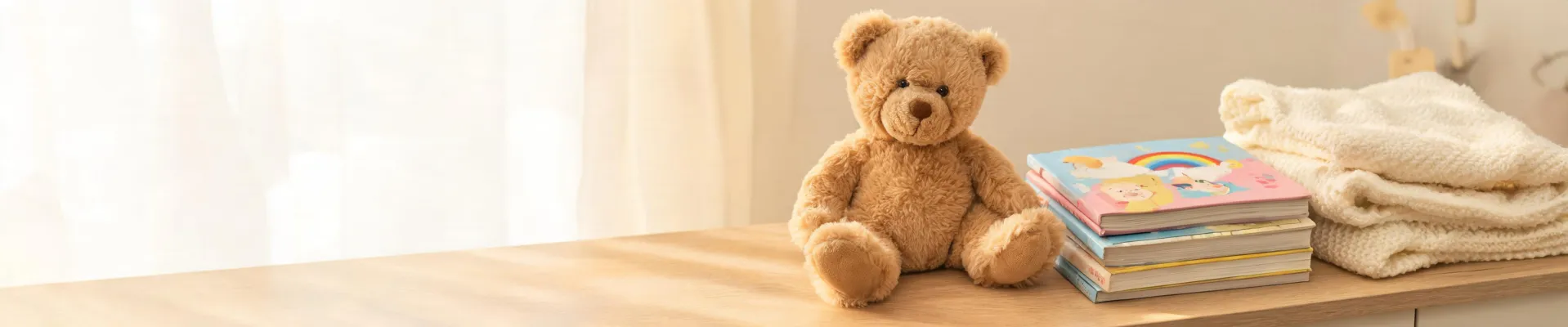
GUND Philbin Bear: What to Check Before You Gift It
2026-10-12 · Miriam Adler
Most gift buyers pick a plush bear by the fur photo, and that is the mistake that shelves a good toy. It shows up three weeks later, when the bear is propped on a dresser facing the room and the child has stopped picking it up. A bear a toddler can't lift or grip with one hand loses to a scruffier, cheaper toy every time. Philbin survives that test better than most bears, but only if you check the right parts before you pay.
The reason Philbin gets carried instead of shelved comes down to its 12-inch body and its extra-large paw pads. The swirled chocolate-brown fur is the part the page puts first, and it is decoration. Change the order of your checks, paws and length before fur, and choosing this bear stops being a matter of taste and becomes something you can measure in a shop in about a minute.
The plush-shopping mistake that shelves a good bear
Philbin's own description splits its life into three verbs: play, display, and sweet cuddles. Those outcomes are not equally likely, and the space between them is where gift money quietly goes to waste. Play and cuddles both require the child to lift the bear and close a hand around it. When a bear fails that test it still sells, and it still gets dusted on a shelf where it looks like a successful gift. That is why the fur photo is the least predictive image on any plush page. Fur is what the adult sees, and the adult isn't the one deciding.
The 18-inch bears stacked in big-box aisles look like more bear for the money until you watch a two-year-old try to carry one. A neighbor's daughter got exactly that for her second birthday, and it lived on top of a bookshelf for a year because she couldn't get her arms around it. Her smaller, plainer bear with flat suede paws went to daycare every day. Same child, same week, opposite outcomes, and the only difference was whether she could lift the thing and hook a finger into a paw.
The 60-second paw-and-size test to run first
Run these checks in order, because a later one tells you nothing if an earlier one fails. First, span the bear with both hands and squeeze the body: you want the filling to push back without the bear folding in half, since a body that collapses under your palms won't hold shape in a toddler's arms either. Second, press a thumb across each paw pad. Third, hook one finger under a paw the way a small hand would and lift; if your finger slides off or the pad rolls flat, a child's hand will do the same. Fourth, hold the bear's length against the child's torso, chin to hip, using your forearm as the stand-in when the child isn't with you. Fifth, tuck the bear under your chin and note where the muzzle lands.
The sequence is deliberate. Grip comes before size, and size comes before looks, so a bear that fails the paw press never earns the benefit of the later checks, no matter how it looks in your cart. The model number in the page address for this bear reads 12 in, which is the number you're testing against your arm.
What 'made for grabbing' actually means in your hand
Philbin's paws are the working part of the bear, and they are built differently from the rest of it. The pads are faux suede rather than the plush used on the body. Suede has a matte, slightly fuzzy surface, and that surface is the reason a small hand can carry the bear one-handed. Bare plush on bare plush slips; a suede pad gives friction without a handle, which means a three-year-old can pull Philbin off a bed by one paw and keep hold of it across a room. Press the pad and you should feel drag, not glide. If it feels slick or plasticky, you're holding a different model or a worn floor sample.
Above the pads, the big muzzle is the second grab point, and it sits high on the bear where a hug actually makes contact, under the chin and against the face. That placement matters because a child hugs near the head, not around the waist. Extra-large paws down at the hands and a muzzle up at the face are two ends of the same grip line, and Philbin has both.
Will it be played with, displayed, or cuddled?
Of Philbin's three listed uses, display is the one nobody plans and plenty of people end up with. Watch the week after the gift is opened. A child who can lift the bear and close a hand on a paw carries it between rooms without being asked; a child who can't leaves it exactly where it was placed. That movement is the confirmation worth looking for, and it never shows up in a product photo.
The reason display appears in the copy at all is that the same bear lands there for a younger or smaller child than the one it was made for. So judge the gift by what the child does with it, not by how it sits on a nursery shelf. If you won't be around for that week, hand the bear over at the moment of gifting and watch whether it gets picked up a second time before you leave the room.
Why fur softness is the last thing to judge
A plush stays in rotation when the child can close a hand on it and lift its mass. Both of those are mechanical facts, tested over hours of carrying. Softness is a tactile fact, tested by an adult in the three seconds it takes to rub a sample against a cheek. That gap is why the flat-pawed bear that feels scratchy at the store outlasts the velvet one that wins the first impression. Philbin's swirl fur passes the three-second test and does nothing for the hours-long one, which means the parts doing the real work are the suede pads and the size of the body, not the coat. The page leads with the fur because that is the line that sells a bear to the person holding the credit card.
The one check before you hit order
Hold the bear, or a 12-inch tape measure, against the child's torso from chin to hip, and mind both ends. If the bear is longer than the torso, the child will drag it by one paw instead of carrying it against the chest, which means the cuddling the page promises never actually happens. The paws are still there, they just never get used for hugging. A bear that ends at the chin or below can be lifted with both arms, and that is the single thing that turns play, display, and cuddles into the first two instead of the third. Fur, muzzle, and the GUND name are all second to that number, because size decides whether the rest of the bear matters at all. Confirm the length against the child before you pay.

Miriam Adler
Miriam Adler is an educational and STEM toy analyst specializing in busy boards, Montessori-style manipulatives, learning towers, sound books, reading pens, pretend-play sets, and early learning toys. She applies ASTM F963 and IEC 62115 methods while evaluating small-part hazards, accessible edges, switch durability, sound output, battery access, pull force, and age-appropriate task complexity. Her work helps parents, retailers, and product teams choose learning products that align developmental goals, supervision needs, interaction design, and the intended age stage.
Recent Gund Notes
The GUND Toothpick Bear Is a Grip-First Travel Companion, Not a Mini Teddy
Why the GUND Toothpick Bear's long, slim limbs make it a travel companion toddlers can carry themselves, and when a mini plush is the wrong pick.
GUND Philbin Bear: What to Check Before You Gift It
Before you buy the GUND Philbin Bear, run a one-minute check on its paws and 12-inch body so you know the child will actually carry it.
How to Read Intex Kool Splash Inflatable Play Center Reviews Before You Buy
Intex Kool Splash inflatable play center reviews record yards, hose pressure and drying habits, not quality tiers. Read them by fit window, not stars.
Graco SnugRide 35 Lite LX Manual: 4 Questions Every Parent Should Answer First
Read the Graco SnugRide 35 Lite LX manual before first use: install with UAS or seat belt, fit the harness, and retire the seat on time.
How to Read Intex Kids' Travel Bed With Hand Pump Reviews Like a Tester
A usable review of an Intex kids' travel bed with hand pump names the pump routine, the seam behavior, and how the sleeping surface gets cleaned.
The Graco Pack 'n Play Caresuite Bassinet Lux Playard: Safe Only When You Match the Mode
When your Graco Pack 'n Play Caresuite Bassinet Lux is safe depends on mode, model number, and recall checks. Here's how to decide tonight and as your baby grows.
Baby Trend Koa Slim High Back Booster: What Reviews Can and Cannot Tell You
Baby Trend Koa Slim High Back Booster reviews stay thin — judge the seat by its convertible stage, slim geometry, and official fit charts instead.
A Double Jogger Lives or Dies by Its Fold, Not Its Wheels: Reading the Baby Trend Navigator Lite Honestly
For a Baby Trend Navigator Lite double jogger, the fold and stow loop that repeats daily decides whether it stays in use, not the wheel size.
Lamaze Freddie the Firefly at Fat Brain Toys: The Sensory Toy Decision Guide
For parents comparing baby toys at Fat Brain Toys, this guide explains when a Lamaze Freddie the Firefly clip-on toy earns its place, how to clean it, and when to pass.
Metal Banister Stair Safety Gate: Choose the Mount That Transfers Force, Not the Trendiest Clamp
On a metal banister, pressure gates can slide on smooth spindles. Hardware-mounted Summer Infant gates anchor to solid structure, so check mount type first.